Kilimanjaro womens trekking guide
Why Every Woman Should Consider Kilimanjaro At Least Once: A Complete Trekking & Safety Guide
By Dr. Manisha Sonawane — mountaineer, homeopathic consultant, and co-founder of SisterRoam
I still remember the first time someone told me Kilimanjaro was "too much" for a woman traveling without a big group behind her. I climbed it anyway. Not to prove anything to that person — but because I'd already learned that the mountain doesn't care who you are back home. It only asks whether you're prepared, patient, and willing to go slowly enough to let your body catch up with your ambition.
Kilimanjaro is Africa's tallest peak and the highest free-standing mountain in the world — and unlike most peaks of its size, it demands no technical climbing skill at all. What it demands is respect for altitude, a good guide, and the mental discipline to walk slowly when every instinct wants to rush. That combination makes it one of the most achievable "big" mountains for a first-time high-altitude trekker — including women who've never done anything like this before.
If you've been quietly wondering whether Kilimanjaro is "for someone like you" — it is. Here's everything I'd want you to know before you go.
Why Kilimanjaro Is a Different Kind of Challenge
You don't need ropes, crampons, or prior mountaineering experience to summit Kilimanjaro. What you need is time on the mountain, because the real opponent here isn't the terrain — it's altitude.
Over the course of the trek, you pass through five distinct climate zones: rainforest, moorland, alpine desert, and finally an arctic-like summit zone at 5,895 metres. That range is part of what makes it extraordinary — and part of why your body needs real time to adjust as the air gets thinner.
This is the single most important thing I tell every woman who asks me about this climb: the mountain is not won by speed. It's won by patience.
Choosing Your Route
There's no single "best" route — the right one depends on your experience, timeline, and how much you want to prioritize a higher summit success rate over cost and crowds.
- Machame Route — Scenic and popular, moderately challenging. A good option for reasonably fit first-timers, though it sees more traffic.
- Rongai Route — Approaches from the north, drier and quieter than the southern routes, and a solid choice if you're trekking during the shoulder or rainy season.
- Lemosho Route — Longer, more remote, and widely regarded as offering the best acclimatization profile and highest summit success rate on the mountain. This is the one I'd point most first-time women trekkers toward if time and budget allow — the extra days genuinely matter.
- Marangu Route — The only route with hut accommodation instead of tents, often considered the "easier" logistics option, though its shorter itinerary gives less time to acclimatize.
My honest advice: choose the longest itinerary you can afford. An 7–8 day climb dramatically improves both your safety margin and your odds of actually reaching Uhuru Peak, compared to a rushed 5–6 day version.
Best Time to Climb
Kilimanjaro can technically be climbed year-round, but two windows offer the most reliable conditions:
- January to March — Clear skies, good visibility, and a real chance of snow-covered scenery near the summit, with noticeably fewer climbers on the trail than the mid-year peak season.
- June to October — The driest, most reliable stretch overall, and also the busiest, with July–August as the absolute peak months.
Avoid April and May if you can — that's the long rains, and trails turn slick and heavy going, which adds unnecessary difficulty on top of the altitude challenge.
Permits, Guides, and the Legal Basics
Tanzanian law requires every Kilimanjaro climber to trek with a licensed guide — solo, independent climbing isn't permitted anywhere on the mountain. This isn't a bureaucratic inconvenience; it's genuinely part of what makes this mountain safe and accessible for first-timers, including women trekking without a large personal support network. Your guide and porter team carry the technical knowledge, monitor you for altitude symptoms, and make the real-time calls about pace.
A few practical basics:
- Book through a licensed, reputable tour operator — they handle your national park permit and fees as part of the package.
- Carry a printed copy of your permit alongside the digital version — network coverage on the mountain is unreliable.
- Confirm your operator's guide-to-client ratio and ask directly about their altitude sickness protocol before you book.
The Real Safety Conversation: Altitude Sickness
This is where I speak as much as a physician as a mountaineer.
Altitude sickness doesn't care about your fitness level. I've watched incredibly fit climbers struggle at altitude while less athletic trekkers who paced themselves well summit comfortably. The mountain's own guiding philosophy — "climb high, sleep low" — exists precisely because gradual exposure, not raw physical strength, is what your body needs to adapt.
Know the early warning signs:
- Headache that doesn't resolve with rest or water
- Nausea or loss of appetite
- Unusual fatigue disproportionate to the day's exertion
- Dizziness or difficulty sleeping
What to actually do about it:
- Report symptoms to your guide immediately — even mild ones. Experienced guides are trained to watch for this and will adjust your pace or, if needed, descend with you. This is not a failure; it's the plan working correctly.
- Never push through worsening symptoms to "not slow the group down." A guide who is doing their job will always prioritize your safety over the itinerary.
- Stay deliberately hydrated and eat even when your appetite drops — appetite loss is itself a common early symptom.
- Walk slowly — "pole pole" (slowly, slowly) is practically a mantra on this mountain, and it's genuinely the single best thing you can do for your own summit chances.
Health Preparation Before You Go
- Consult a travel medicine specialist 4–6 weeks before departure — routine vaccinations should be current, and depending on your travel route, a yellow fever vaccination may be required.
- Malaria prophylaxis is generally recommended if your trip includes lower-elevation time before or after the climb.
- If you're on any regular medication, discuss altitude-specific interactions with your doctor beforehand, not on the mountain.
- Build cardiovascular fitness in the months before your trip — but remember, fitness helps your comfort on the trail; it does not substitute for proper acclimatization days.
What to Pack
- Layered clothing for five climate zones in one trip — moisture-wicking base layers, an insulating mid-layer, and a genuinely windproof, waterproof outer shell
- A summit-rated sleeping bag (temperatures at high camp regularly drop well below freezing)
- Broken-in, waterproof trekking boots — never summit in new boots
- Trekking poles — they save your knees more than most first-timers expect
- A headlamp with spare batteries for the summit night departure, which typically begins around midnight
- Sun protection — UV exposure is intense at altitude even in cold temperatures
Why I'd Especially Encourage Women to Do This
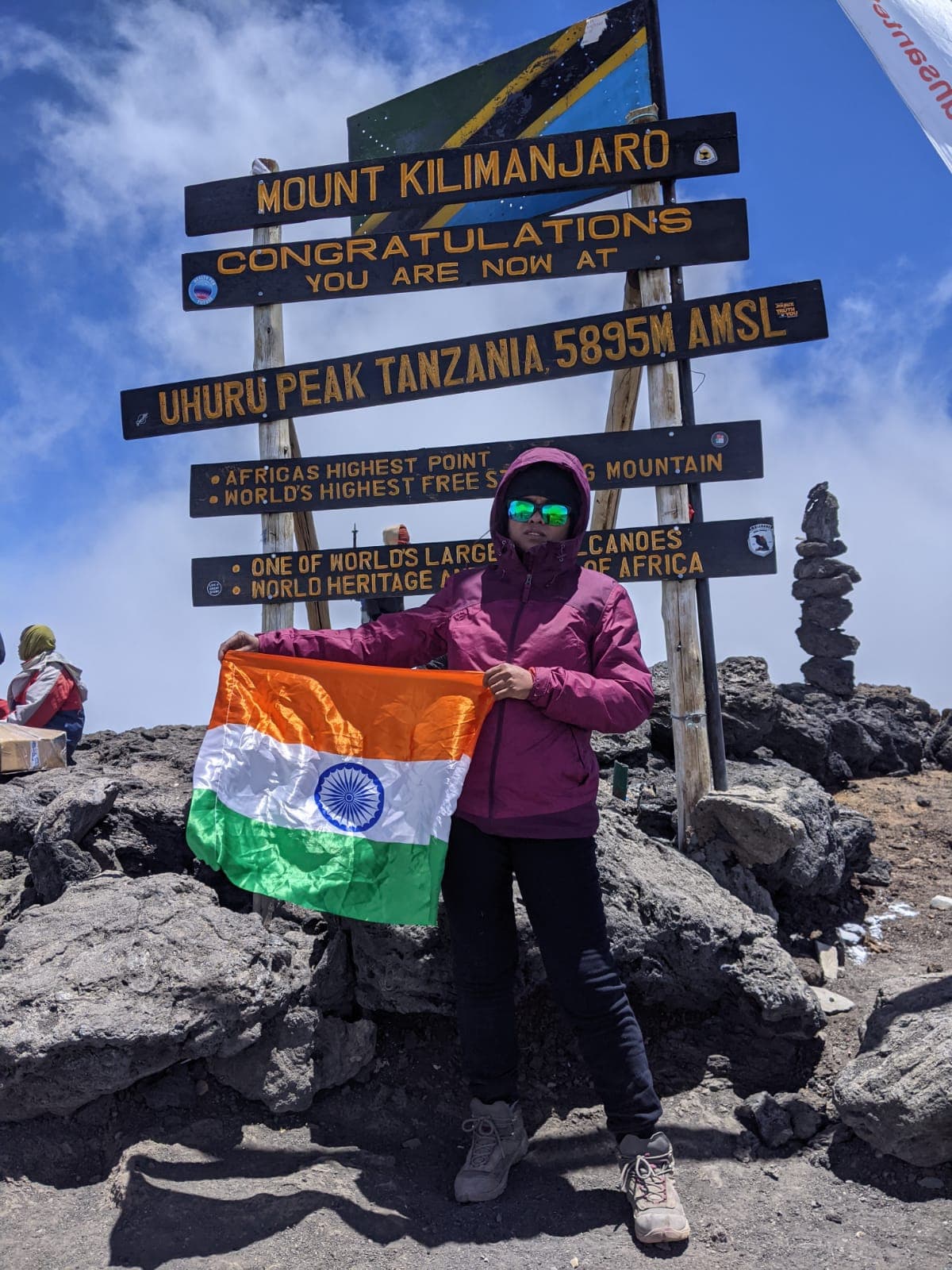
There's a particular kind of confidence that comes from standing at Uhuru Peak after days of walking slowly, listening to your body, and trusting a plan you built with intention. It's not about proving something to anyone watching from home. It's about discovering what you're actually capable of when you stop underestimating yourself before you've even tried.
I've mountaineered in places where I was the only woman in the group, and I've also trekked alongside incredible women who came to the mountain with zero prior experience and left as changed people. Kilimanjaro doesn't require you to be an athlete. It requires you to be patient, prepared, and willing to go at the pace your body needs — which, honestly, is a skill that serves women well far beyond any mountain.
If you've been sitting on this dream, treating it as something for "someday" — I'd gently push back on that. Research a reputable operator, choose a longer route for a better safety margin, and start building your fitness base now. The mountain isn't going anywhere, and neither is the version of yourself who's ready to stand on top of it.
Have you trekked Kilimanjaro, or is it on your list? Share your questions or your own summit story below — this community exists so none of us have to plan these big, brave trips entirely alone.
Manisha Sonawane
Pune